Redesigning Tunder's subscription model and conversion architecture to transform confused free users into confident paying customers.
Scope
User research and competitive analysis to identify root causes of low conversion
Subscription model strategy to simplify pricing and eliminate decision paralysis
Design system development to accelerate execution and enable rapid iteration
Strategic impact
2x revenue growth: MRR increased 102% within 12 months
2x increase in paying users: Increased 92% subscribers within 12 months
2x conversion improvement: Conversion rate doubled from 1% to 2%
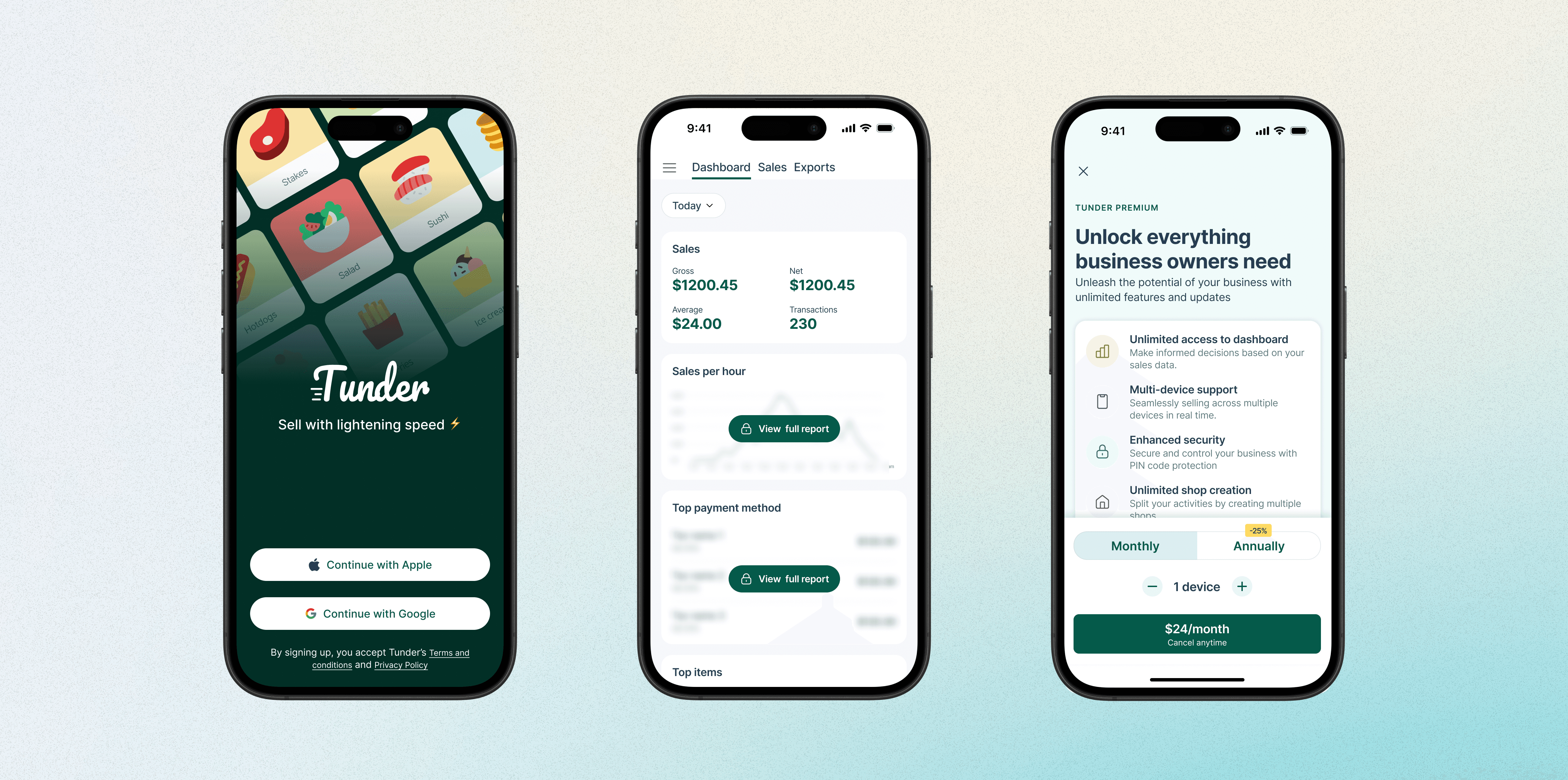
Problems
1% conversion rate blocking growth
🔥
Conversion problem
Users engaged deeply with free features but rarely converted to paid plans when hitting limitations.
🔥
Business needs revenue
Strong product-market fit with free users, but ineffective monetization was blocking sustainable growth.
Research & insights
Three plans weren't offering choice, they were creating confusion
🔍 Research methods
Customer support analysis: Reviewed 6 months of CS tickets
Behavioral analytics: Analyzed Amplitude conversion funnel data
Competitive benchmarking: Evaluated 8 POS competitor products
💡 Insights
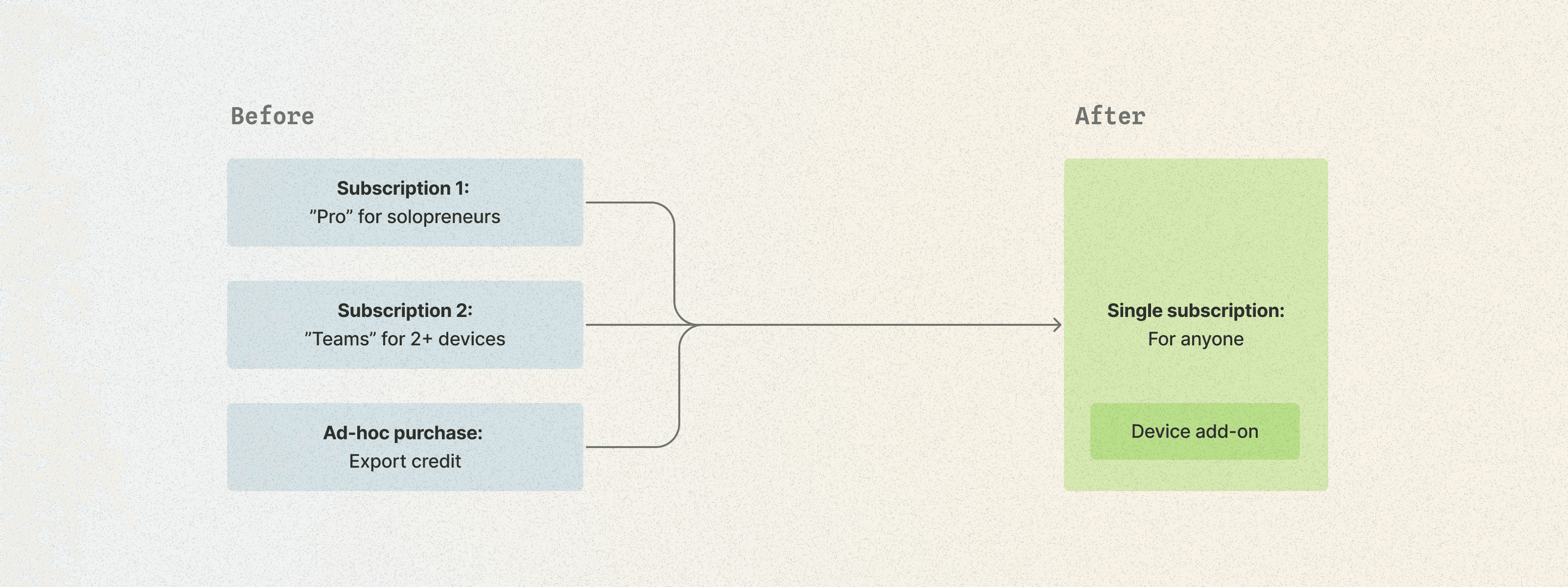
Overlapping and unclear subscription options
Three overlapping payment options (Pro, Teams, ad-hoc sales exports) created decision paralysis
Missing baseline features
Missing baseline features like payment integrations made our premium less compelling
Competitive benchmarking
Analyzed 8 POS competitors. Clear pattern: successful freemium products offered one simple plan with device-based pricing and included sales analytics as core value, not an add-on.
Key strategy
Consolidate three revenue streams into one transparent plan
💥 The challenge
Rebuilding subscription logic required substantial time
✨ Mitigated by: Built a design system first to accelerate future development by 50%
Ad-hoc export credit buyers might resist forced monthly subscription
✨ Mitigated by: Replaced ad-hoc exports with sales dashboard included in premium, creating higher perceived value
Reverting to the old model would be impossible
✨ Mitigated by: Validated decision through competitive research, customer feedback analysis, and behavioral data before committing
Key outcome
Translating strategy into conversion touchpoints
1️⃣ Redesigned paywall
Problem
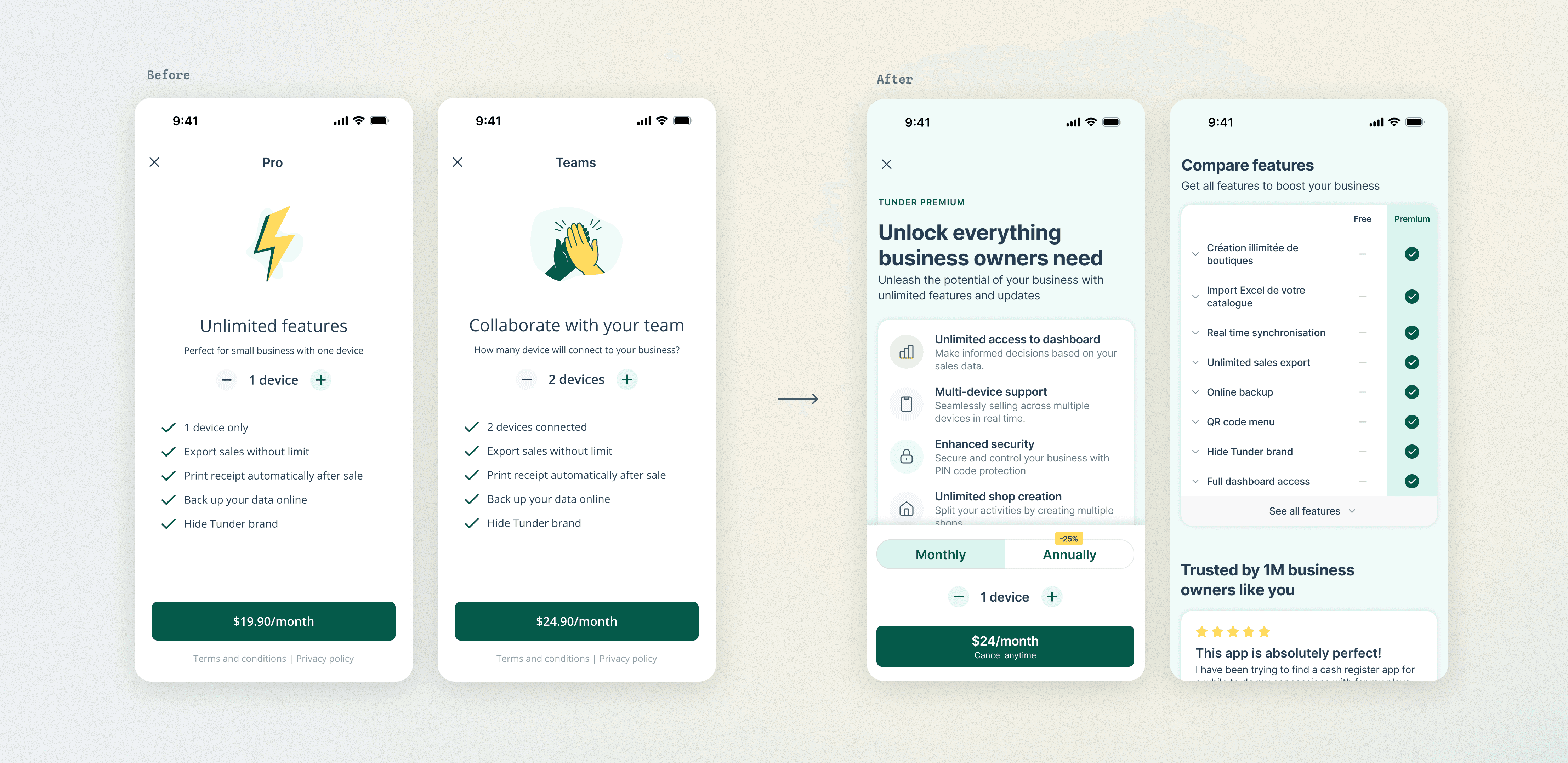
Old paywall had bullet points with minimal detail, creating high cognitive load. Users couldn't confidently decide if premium was worth it.
Solution
Comprehensive paywall with complete feature list organized by category, social proof, usage stats, clear pricing calculator, and risk reduction (trial, easy cancellation). Counterintuitively, adding MORE information reduced friction.
2️⃣ Strategic sales dashboard
Problem
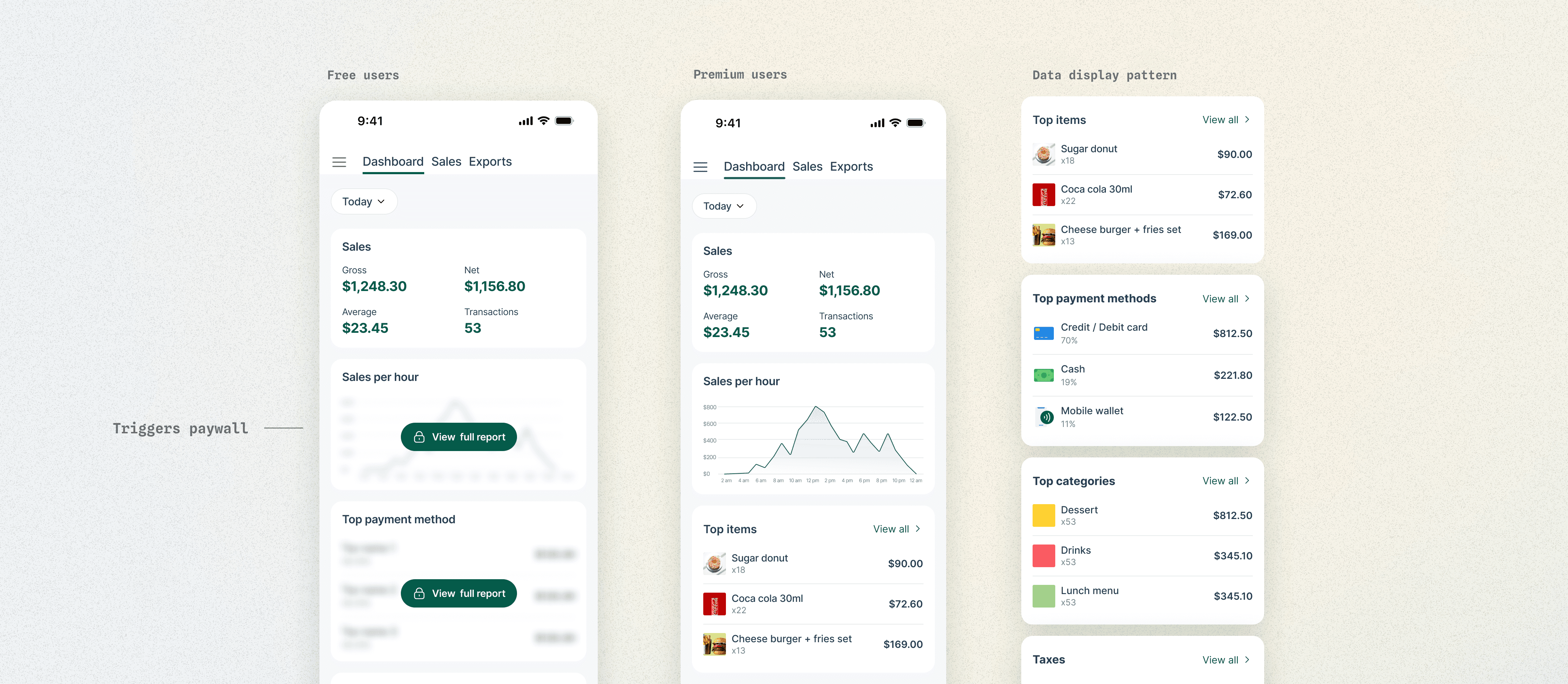
Sales data was an overlooked add-on feature. Users needed analytics to grow their business but didn't understand its value as a separate purchase.
Solution
Built a dedicated sales dashboard designed as a conversion lever. Free users see basic data (total sales, transactions) while premium insights are blurred. One-tap upgrade from blurred view.
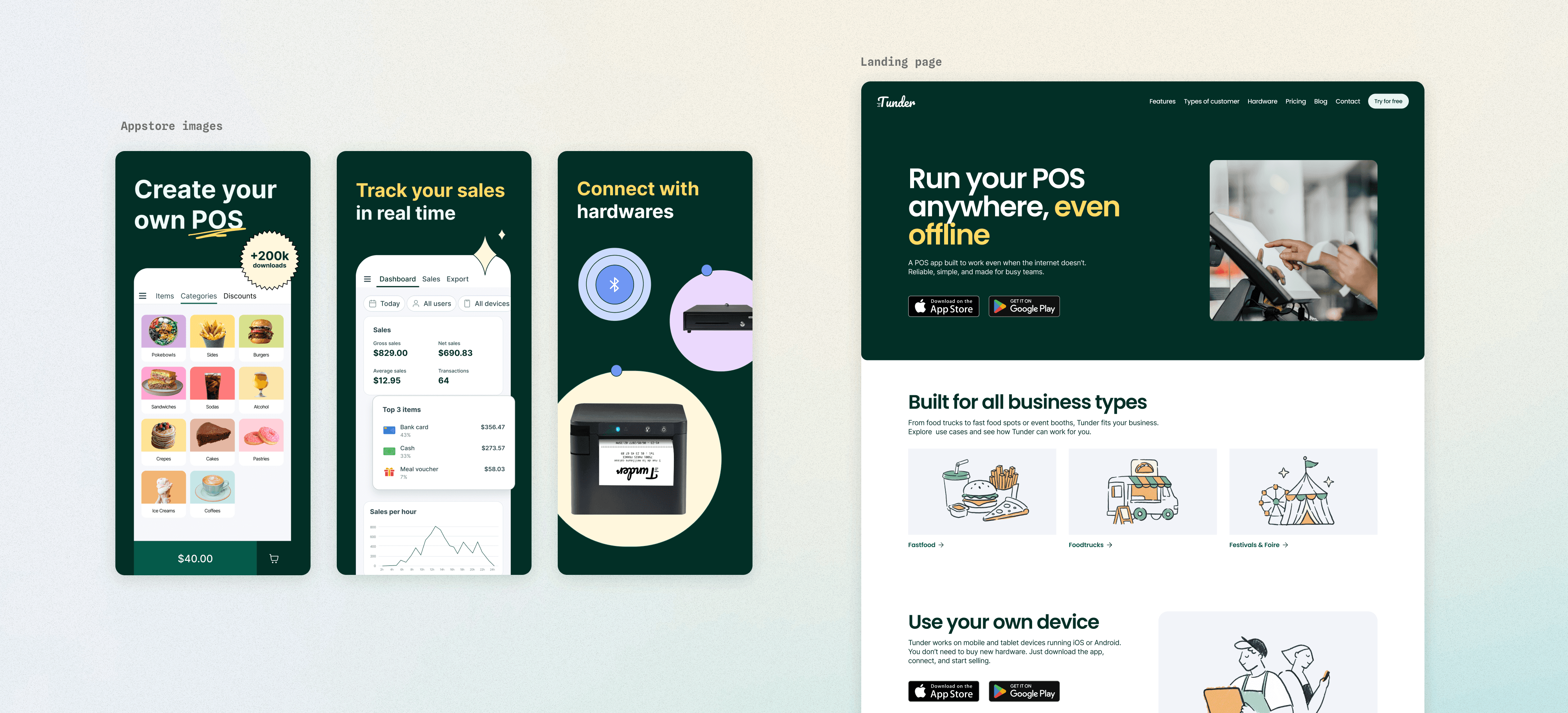
4️⃣ Optimized acquisition
Problem
App store presence and landing page had unclear value proposition, attracting unqualified users who wouldn't convert.
Solution
Redesigned app store imagery and landing page with clearer messaging about target users (food trucks, fast-food, festivals) and core value props.
4️⃣ Design system
Problem
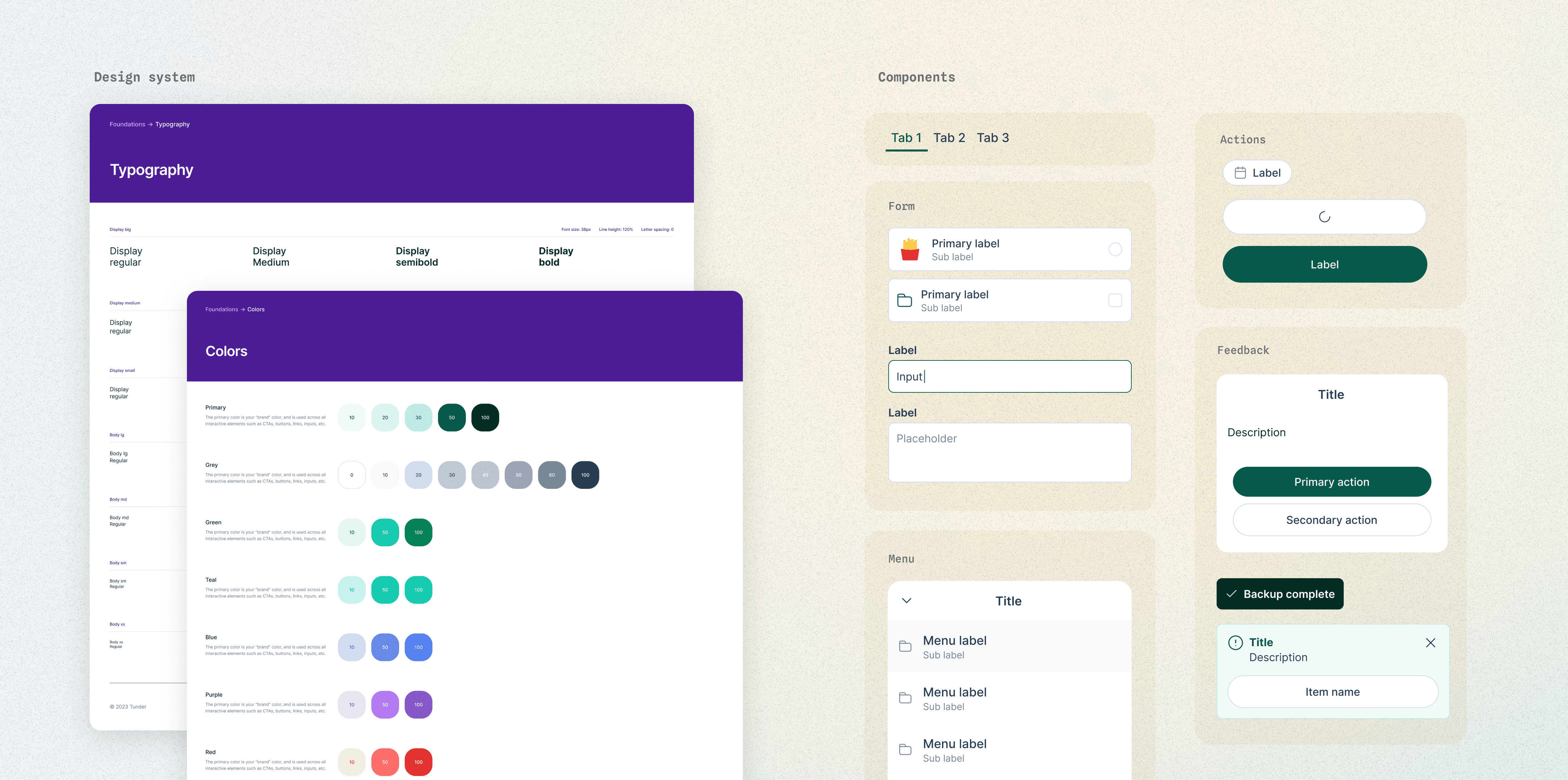
With a small 3-person team (me + 2 founder-engineers), we couldn't iterate quickly on conversion experiments or ship competitive features. Inconsistent design patterns were slowing development.
Solution
Built a comprehensive design system covering core components (buttons, forms, navigation). Prioritized critical-path components first so we could start improving conversion immediately while building long-term infrastructure.
Outcome
Conversion and revenue growth
2x revenue grwoth
↑ 102% in 12 months
2x paying users
↑ 92% in 12 months
2x conversion rate
1% → 2%
→ Users felt "finally clear" on which plan they needed
→ Seamless scaling for expanding businesses
→ Closed competitive feature gaps (payment integrations, analytics)
→ Founders could ship features independently with design system
Reflections
What I learned
✨ What worked
Systems thinking: Redesigned entire freemium model, not just paywalls
Infrastructure investment: Design system paid exponential dividends for small team
Progressive disclosure: Blurred dashboard created effective FOMO without blocking access
🪄 What I'd do differently
A/B test paywall variations: We shipped one strong design but didn't test messaging, feature ordering, or pricing presentations
Earlier user testing: Validated through research and analytics but direct testing would have de-risked transition